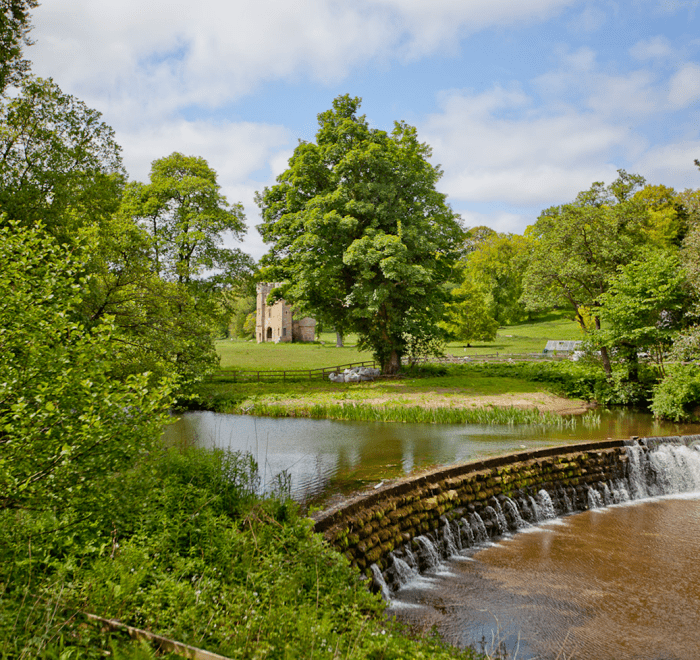
Across the wider Estate are a variety of residential properties, working farms, extensive farmland, and a mix of other unique assets that may be available to rent.

These include land, allotments, residential properties, and recreational facilities, all managed with a focus on sustainability and long-term stewardship. Availability varies, and enquiries should be directed to the Estates team for further information.
Residential
The Estate owns and manages a significant residential portfolio. From cottages to farmhouses, these are rented out through the Estate Office in Alnwick. Details of available properties can be found in the For Sale & to Let section.


Farms and Land
Northumberland Estates manages approximately 80,000 acres of farmland. Much of this is let under full agricultural tenancies, but more recent letting of both farms and land have been under Farm Business Tenancies (FBT’s) and similar agreements. Any available opportunities are listed in the For Sale & To Let Section.
Residential
Development Sites
Northumberland Estates specialises in identifying planning opportunities and bringing them to market with planning permission. Any development sites currently available are listed in the For Sale & To Let Section.

Sporting
Northumberland Estates’ keepers manage many acres of grouse moor, pheasant and partridge shooting across the Estate. Occasionally let shoot days and stalking opportunities may arise.
Other Property
Northumberland Estates also has a number of other rental sites under its ownership, from golf courses and sports fields to allotments and more.

Coquet Island
Coquet Island is the only colony in the UK where Roseate Terns breed and also hosts Puffins, as well as Common, Arctic, and Sandwich Terns, Eiders, Razorbills, Fulmars, Kittiwakes, Herring Gulls, Lesser Black-backed Gulls, and Black-headed Gulls.
Managed by a dedicated team of conservationists and owned by Northumberland Estates, our objectives for Coquet Island include:

Looking after Red Squirrels on the Estate
Northumberland is one of the last strongholds of our native red squirrels and Hulne Park at Alnwick is home to a good population. Owned by Northumberland Estates, visitors to Hulne Park may be lucky enough to experience a sighting of one of these endangered animals. If so they are encouraged to report any sightings to Red Squirrels Northern England via their website. This information is vital if scientists are to build an accurate picture of red squirrel populations in the UK.
The Duke of Northumberland is a keen supporter of red squirrel conservation work and recently launched a levy scheme to encourage landowners to aid conservation efforts. He also hosted an awards ceremony designed to honour volunteers who assist conservation efforts nationwide.

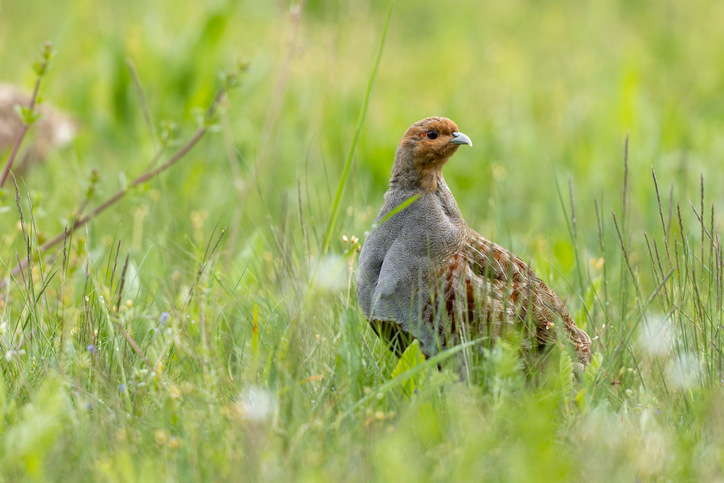
Grey Partridge Conservation
For almost 20 years, Northumberland Estates has operated a Grey Partridge conservation project with the aim to initially halt the decline in numbers on the core arable land and then create a surplus.
Recognising that existing conservation schemes of the time were doing little more for existing Grey Partridge populations than allowing them to survive, the first move was to improve habitat and over the years the benefits in terms of wildlife and biodiversity have proved immense.
In 2007, the Grey Partridge project won the prestigious Purdey Award for Game and Conservation. Creating an ideal environment for wild Grey Partridge while simultaneously maintaining profitability on what is an intensively farmed arable unit, is a considerable challenge. Added to that not all of the land is farmed in hand, with local tenant farmers encouraged to participate.
What has resulted is not just a dramatic increase in Grey Partridge numbers, but bird counts show populations of many other species have also improved including tree sparrows, yellow hammers, blackbirds, and many more. Brown hare populations have also benefited.
South of Scotland Golden Eagle Project
Burncastle Estate in the Scottish Borders has become the first estate to build two new artificial golden eagle eyries (nesting sites) as part of the South of Scotland Golden Eagle Project.
The Duke of Northumberland added: “We’ve been thrilled that the work of the project has led to golden eagles re-establishing a presence in the south of Scotland and it has been exciting to see these magnificent birds occupy a range close to Burncastle.
“The estate was very keen to play a part in helping the birds, and the opportunity to build the eyries on Burncastle will hopefully raise the prospects of new chicks being born in the future.”

The King’s Trust
Northumberland Estates has partnered with The King’s Trust to offer educational, practical, and work experience opportunities for young people. We have welcomed participants from various King’s Trust programs, who have engaged in livestock management and environmental conservation sessions, explored historical property restoration—including stone carving and other essential restoration skills—and gained valuable work experience.

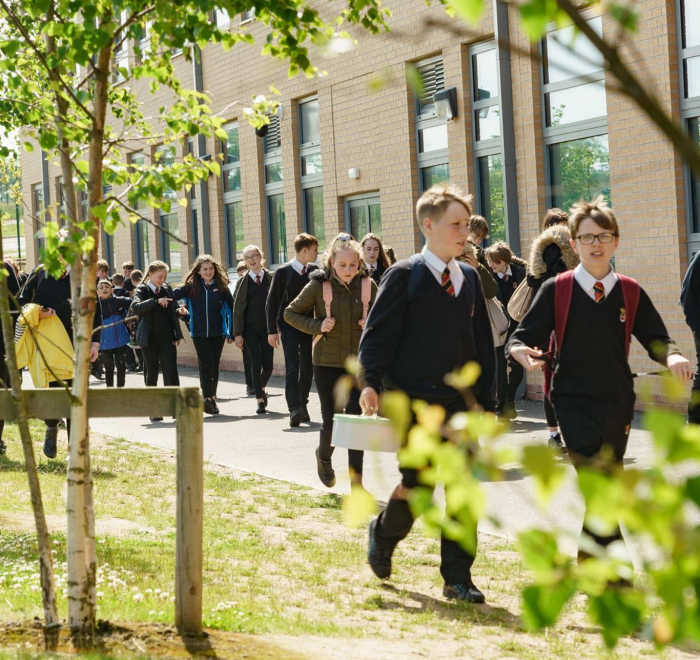
Northumberland C of E Academy
In 2009, Northumberland Estates partnered with the Church of England to become a joint sponsor of The Northumberland Church of England Academy in Ashington. The school serves boys and girls aged 3 to 19 and was purpose-built at a cost of £50 million, accommodating over 2,600 students. Northumberland Estates continues to maintain connections with the Academy and is still involved through consultancy support.

St Cloud State University
Alnwick Castle has served as a campus branch for students from St. Cloud State University in Minnesota, USA, for over 30 years. This experience is a vital component of their International Study Program, allowing students to immerse themselves in different cultures and customs while earning credits toward their degrees. During their time in Alnwick, students reside and study at the Castle and often spend time with local families. Many of them develop lasting connections with Northumberland Estates and the town itself.
Northumberland Estates also contributes to the St Cloud Scholarship Fund.

NCEA Harry Hotspur C of E Primary School
Harry Hotspur CE Primary School is the new name for what was previously St Michael’s.
The name honours Sir Henry Percy, known as Harry Hotspur, the eldest son of Henry Percy, 1st Earl of Northumberland, recognised for his speed and bravery in battle.
This name change reflects the school’s rich history tied to both the Diocese and the Duke of Northumberland, celebrating these connections while embracing a new future. In support of this transition, the Estate provided all students with the new school uniform at no cost.

The Duchess’s Community High School
Northumberland Estates has shown a strong commitment to Alnwick schools for centuries. The Duchess Community High School traces its origins back to 1808 when Duchess Julia established a school for 20 local girls. More recently, the Estate played a significant role in developing the school’s new purpose-built facilities for the High School, donating a 20-acre site valued at over £8 million. An additional 10 acres have also been provided for playing fields and to establish a new sports club for the town.
We continue to support the school through funding for books for their ‘Reading for Pleasure’ project and assisting with career development opportunities.
Brentford Penguins
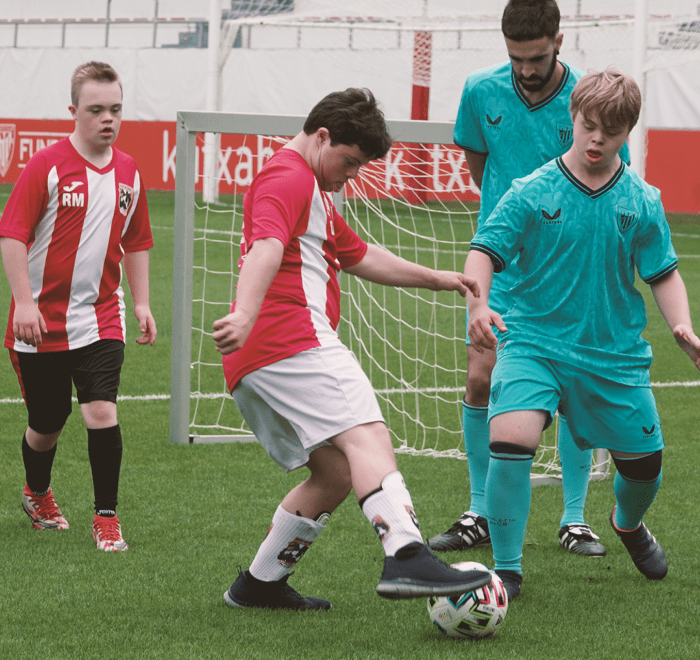
Brentford Penguins has been nominated by the staff at Syon Park as their charity of the year for 2024. During this time, they applied for a grant to purchase a van, which has greatly enhanced their operations. The Club primarily uses public playing fields for their activities, which means they have to storage and transport of a significant amount of equipment. The new vehicle allows the Club to conduct sessions more regularly and efficiently transport a variety of items, including nets, balls, and first aid supplies.
Brentford Penguins were set-up by former Brentford winger Allan Cockram and is open to people with Down’s Syndrome in West London aged eight to 30 who want to play football and enjoy themselves while getting some exercise.
The Club runs weekly outdoor training sessions which are open to boys and girls with Down’s syndrome aged 5 and over who want to learn and practice their football skills such as passing, dribbling and shooting whilst also improving their balance, coordination and agility. Not only are they a football club but we also organise events for the kids, host holiday Football Camps and we are also lucky enough to attend some of the Premiership games at Brentford FC. The Club also helps promote and educate the wider community about Down’s Syndrome through school visits and presentations.
The Country Trust
The Country Trust is the North East’s leading educational charity connecting children from areas of high social and economic disadvantage with the land that sustains us all. Through food, farming and countryside experiences they aim to empower children to be confident, curious and create change in their lives so that they and society can thrive.
Thanks to the Northumberland Estates Community Fund, six educational visits to Broxfield Farm near Alnwick have been fully supported. This project enables over one hundred and fifty children from deprived areas of Northumberland and Tyneside to enjoy practical outdoor learning about food, farming, and the rural environment. Additional funding has been provided to cover coach costs for another eight schools to access farm and countryside visits.
Some of the children have not been out of the estate before and are only used to being in the city. They loved to find out about the cows. They loved the open spaces and running up the hill – and rolling down! They said they didn’t just like it, they loved it!

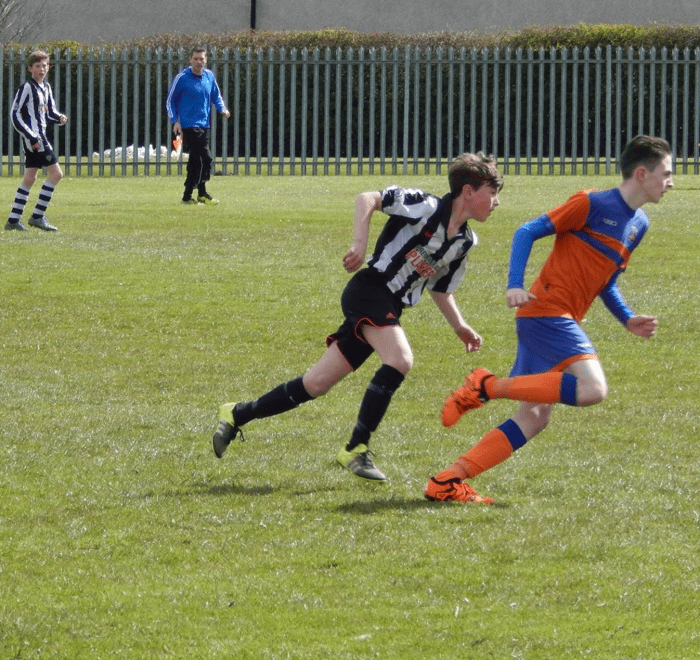
Alnwick Town Junior Football Club
Northumberland Estates provided funding to Alnwick Town Junior Football Club with the aim of enhancing facilities for players, staff, and fans and improving the overall matchday experience and strengthening community ties.
The funds were used for several key enhancements, including pitch improvements, the addition of dugouts, and the installation of a Crowd Control Barrier. These upgrades are vital as the club strives to raise its standards and ensure a safe and enjoyable environment for everyone involved.
Currently, 22 teams are active within Alnwick Town Junior Football Club. Northumberland Estates is the main sponsor of the Alnwick Town Ladies Football Team for the 2023/24 and 2024/25 seasons, in addition to supporting several junior teams within the club as a kit sponsor.
Northumberland Mountain Rescue
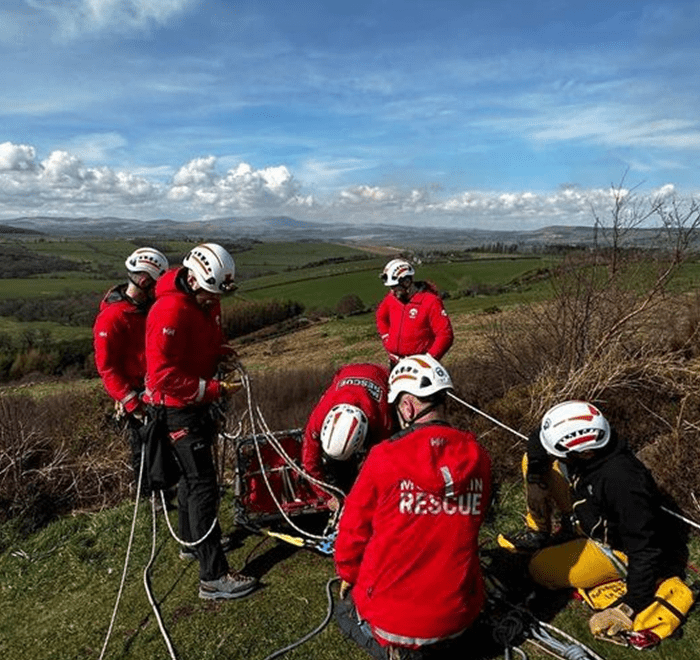
Northumberland Estates funded 14 medical diagnostic kits for the Northumberland National Park Mountain Rescue Team.
Northumberland National Park Mountain Rescue Team provides a vital life-saving, emergency search and rescue service across the whole of the Northumbria Police area. This vast and largely remote and unpopulated area encompasses all of Northumberland and Tyne and Wear, and measures approximately 5,000km².
A team of approximately 50 highly trained members and resources are on call 24 hours a day, 365 days a year, to save lives and alleviate distress among persons affected by an accident, disaster or natural hazard.
NE Youth
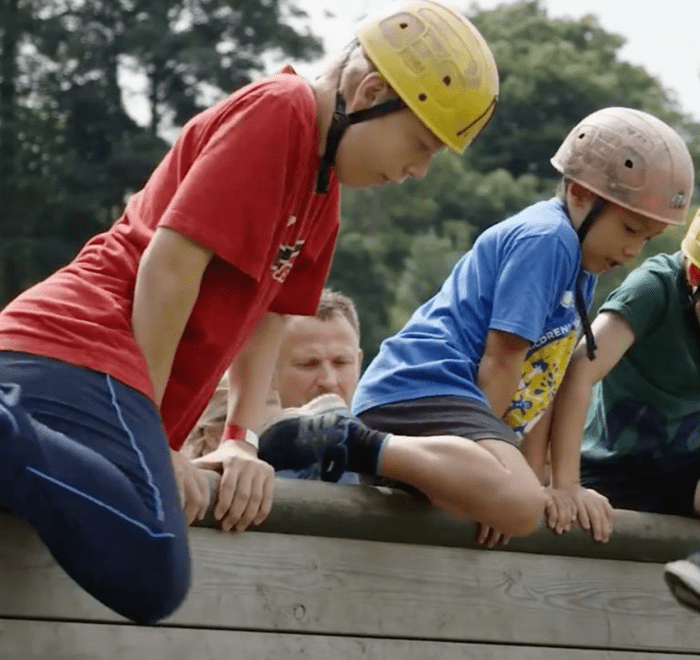
NE Youth is a leading youth development charity supporting young people and youth organisations across the North East of England. Working with young people aged 6-25, many facing disadvantages, NE Youth’s services directly support over 3,000 young people annually.
The charity has a longstanding relationship with Northumberland Estates. Both share a passion for supporting and investing in our region’s young people. Northumberland Estates contributes to the charity’s fundraising in several ways, including facilitating the NE Youth Annual Clay Pigeon Shoot which raised over £73,000 this year and allows NE Youth to deliver impactful services for young people.
NE Youth works with young people in the community through a range of schemes as well as weekly sessions. These sessions are safe places for young people, and important contact points to teach about life skills such as cooking, relationships, sexual health, drug education, social outreach and beyond. Through the consistency of these sessions, youth workers build trust with young people to ensure they can achieve the best outcomes.
One of NE Youth’s larger programmes is the Odysseus Mentoring Programme (OMP), which matches at-risk young people from the region’s most deprived areas with volunteer mentors. The project aims to turn their lives around through a bespoke programme of interventions and weekly meetings with their mentor, giving young people confidence to deal with their problems and break the cycle of offending.
Hulne Priory Repairs
CATEGORY
Historic Buildings
BUILT
1240
GRADE
I
RECENT WORK
Overview of works
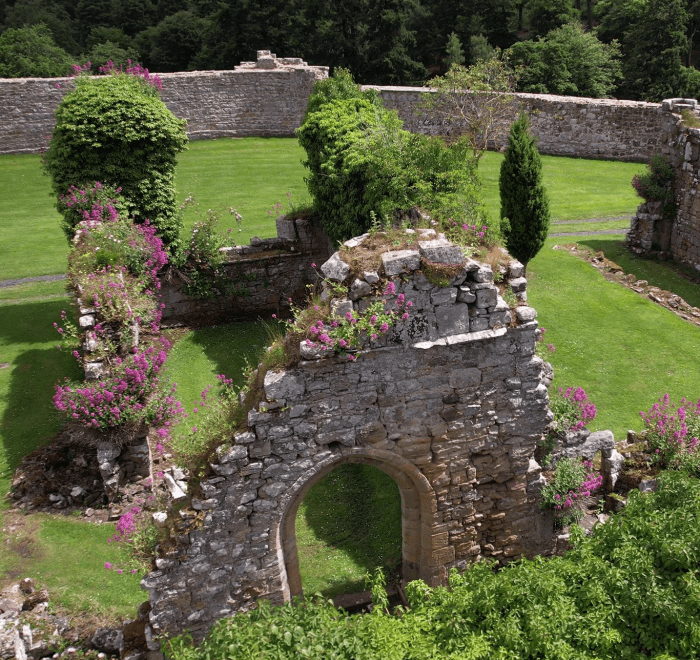
Hulne Priory, established by the Carmelites in 1240, is a Scheduled Monument of significant historical importance, recognised as the best-preserved and possibly the earliest Carmelite friary in England. Situated within the Grade I Registered Park and Garden of Hulne Park, the priory’s remains are surrounded by a defensive boundary wall, a testament to the tumultuous border conflicts between England and Scotland.
Though the priory was dissolved in 1539, its ruins continue to narrate the stories of centuries past. Over the years, Hulne Priory has faced various conservation challenges, including deteriorating mortar joints, unstable wall heads, and excessive vegetation growth. The use of inappropriate cementitious mortar in previous restoration efforts has exacerbated the stone’s deterioration.
Initial conservation work began in 2013 but was paused in 2015. In 2021, efforts resumed with a focus on the south boundary wall, prioritising public safety while ensuring the preservation of this historic monument for future generations.
The scope of our current conservation work includes:
Alnwick Station Regeneration
CATEGORY
Historic Buildings
BUILT
1887
GRADE
II
RECENT WORK
Overview of works
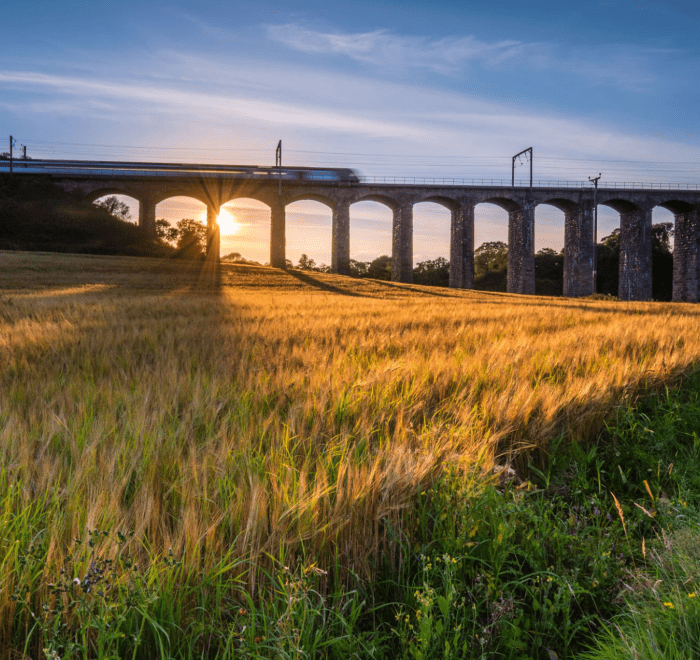
Future projects include the regeneration of Alnwick Station.
The Victorian railway station in the heart of Alnwick was designed and rebuilt by William Bell in 1887. Once a busy railway station, the 32,000 sq. ft, Grade II listed building is now the home of Barter Books.
Recognising the special architectural and historical significance of the station, Northumberland Estates has work scheduled to re-slate the roof, which will help ensure structural safety for years to come and protect the building from deterioration stemming from the ageing roofs.
The work will be undertaken using materials that match the original as closely as practically possible.
Tenantry Column Restoration
CATEGORY
Historic Buildings
BUILT
1096
GRADE
I
RECENT WORK
Restoration
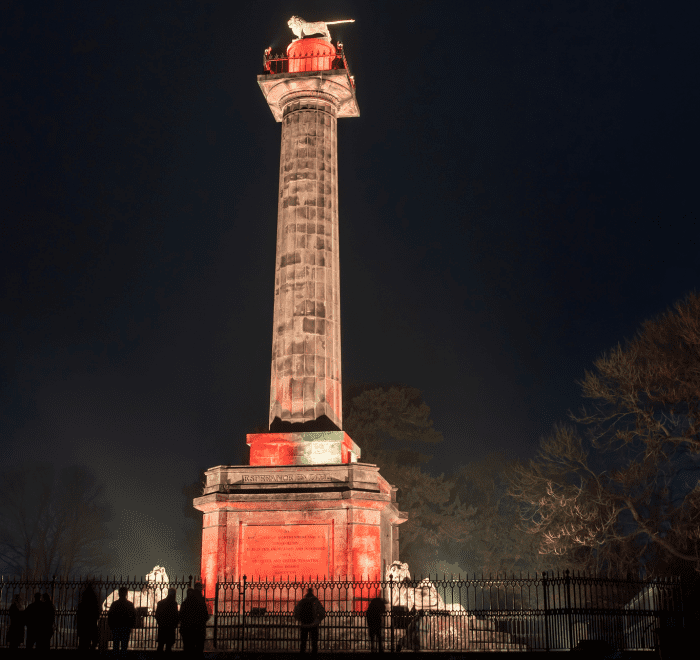
A new lighting scheme has been installed as part of a comprehensive three-phase repair and restoration project for the Grade I Listed Percy Tenantry Column in Alnwick.
Northumberland Estates has conducted detailed structural surveys to assess the condition of the 83 ft tall Doric column, and conservation work began in 2023. The newly implemented architectural lighting system, featuring energy-efficient LED technology with colour capabilities, beautifully highlights the column and enhances its visibility, creating more opportunities for community engagement and public enjoyment.
As we move forward, a specialist condition survey of the Coade Stone lions is underway, with remedial works anticipated to be the final phase of this significant project. We are dedicated to preserving this iconic landmark for future generations while enhancing its role in our vibrant community.
Preserving Alnwick Castle
CATEGORY
Historic Buildings
BUILT
1096
GRADE
I
RECENT WORK
Overview of works
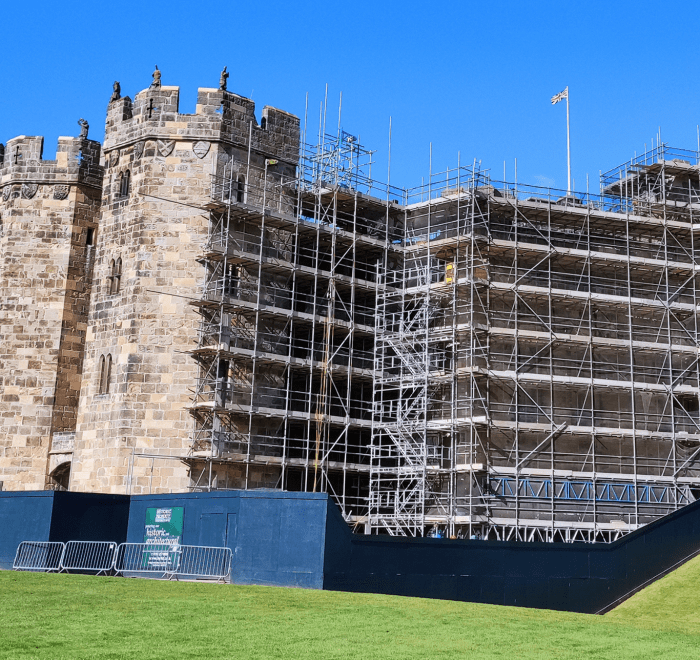
Maintaining Alnwick Castle as a visitor attraction involves significant structural repairs to ensure its beauty and integrity for generations to come.
In recent years, we have undertaken extensive work on the curtain walls, numerous towers, and battlements. This includes the restoration of ornate sculptures, essential glazing and joinery repairs, and the installation of lightning conductors for safety. Notably, we have meticulously repaired the spiral stone access stairs to the North Wall walks and uncovered the entrance to the 18th-century ice house in the castle grounds, which was carefully dismantled and rebuilt.
Currently, we are nearing completion of the latest phase of restoration in the Castle’s inner keep. As one of the busiest areas, this work has been executed with utmost care, sensitivity, and efficiency, ensuring minimal disruption to our visitors’ experience.
Our commitment to preserving Alnwick Castle not only preserves its historical significance but also enriches the experience for everyone who visits.
Looking Ahead
Forestry is a long-term investment, and while predicting future needs can be challenging, we are prepared for the opportunities ahead. Recent storms in 2021 resulted in significant timber loss, prompting a reassessment of our growing stock. However, these challenges also bring new opportunities for landscape renewal and species diversity.
A warming climate allows for a broader range of species, which enhances resilience against disturbances like disease and extreme weather. We aim to increase species diversity through both restocking and natural regeneration, ensuring our woodlands can thrive in changing conditions.
As market demands evolve, we recognise the growing emphasis on engineered wood products. Projections indicate a 20% increase in pulpwood availability and a 100% rise in sawlogs over the next 20 years. We will focus on producing high-quality sawlogs by carefully selecting seed origins and implementing effective management strategies.
The demand for multi-purpose woodlands is increasing, balancing timber production with recreational access and ecological benefits. Our woodlands serve as vital carbon sinks, protect biodiversity, and provide economic and health advantages for communities.
We are committed to nurturing our ecosystems, ensuring they continue to provide essential resources and benefits for future generations.
Sustainable
Management
Practices
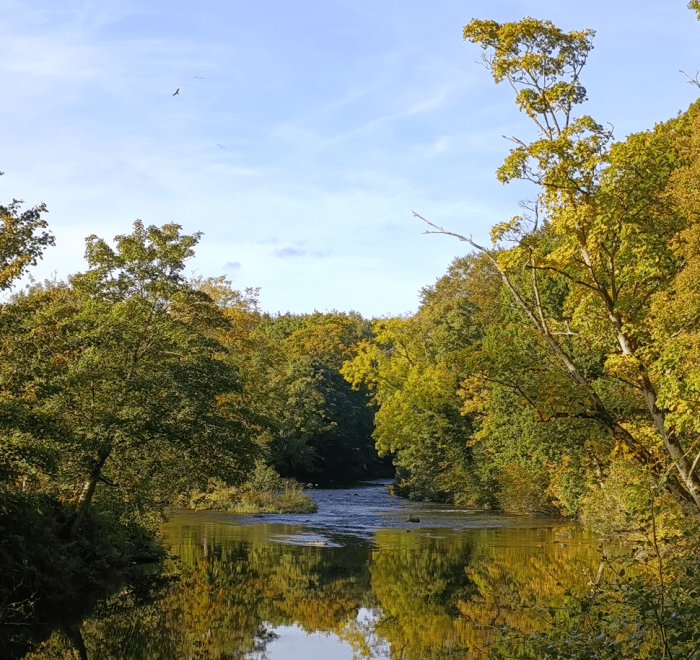
Our Estate woodlands are managed on a sustainable basis, ensuring that an equal area is felled, thinned, and restocked each year. This approach aligns with the UK Forest Standard, emphasising sustainability as a way to meet current needs without compromising future generations.
We primarily employ a clearfell-and-replant system, with coupe sizes ranging from one to twenty hectares. This method maximises efficiency and production while minimising costs in commercial coniferous woodlands. For the broadleaved woodlands near Alnwick Castle, our goal is to maintain continuous tree cover by selectively clearing smaller areas for restocking.
After clearing, branch wood is managed through burning or windrowing to facilitate replanting. Deer fencing is used as necessary, and individual tree protections like grow tubes are employed. Planting occurs from November to April, with densities of approximately 2,500 trees per hectare for conifers and 1,700 for broadleaves. Historically, we grew our own transplants on the Estate, but now we source from commercial growers to ensure high-quality, genetically diverse stock.
Routine maintenance, inspections, and careful thinning operations begin at around 20 years of age, with the aim of promoting the best trees while ensuring ecological stability.
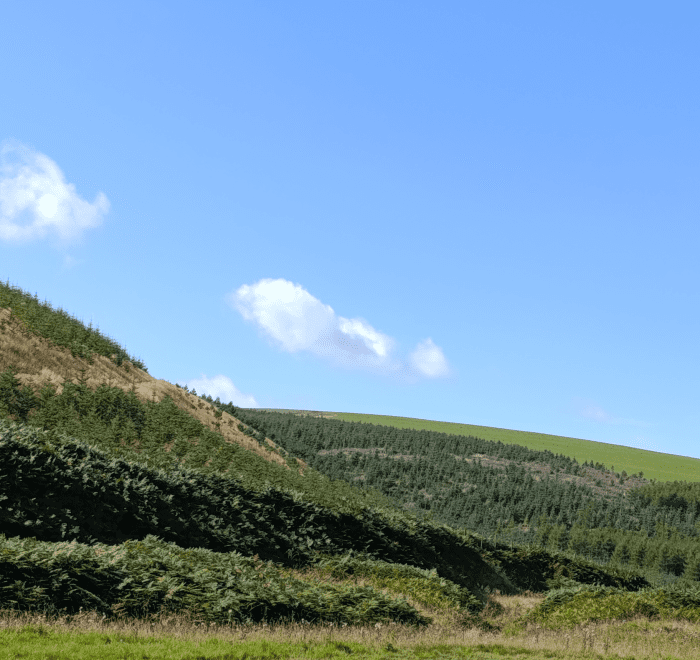
Hulne Park
A highlight of our woodlands is Hulne Park, which accounts for 15% of the total forest estate. This historic woodland provides myriad ecological benefits. The earliest record of trees in the Park dates back to 1184, when Eustace de Vesey transported timber to Alnwick Abbey from his woods.
In the early 1700s, much of the Alnwick landscape was barren due to border warfare. The 1st Duke of Northumberland began replanting efforts in the latter half of the 18th century, with significant plans laid out by Thomas Call in 1751. Working alongside Cornelius Griffin, they managed a labour force of over 120 men to cultivate the woodlands.
After Griffin’s death in 1772, Lancelot “Capability” Brown took over management, pioneering the restoration and transformation of the landscape. Subsequent generations have continued this vision.